Hiragana and Katakana
There are three writing systems in Japanese - hiragana, katakana, and kanji. Hiragana is a set of characters that each represent sounds and are used for native Japanese words. Katakana is similar, but this set of characters is used for loan words or foreign words into a uniquely Japanese word. Kanji is the Mt. Everest of Japanese, and it has tens of thousands of kanji characters that represent words and meanings. So, while Hiragana and Katakana handle the sounds in Japanese, Kanji adds that visual punch to the language and mastering it opens up a whole new world of understanding.
Hiragana and katakana, sometimes referred to as just “kana,” are the building blocks of the Japanese language and we will be focused on those two writing systems in this book. So, before you turn the anime subtitles off or try to video chat on iTalki, you should take some time to learn them both and a whole lot of vocabulary.
Hiragana is one of the first stepping stones you'll encounter on your path to mastering Japanese. It's an essential part of the writing system, serving as the foundation for expressing sounds and constructing words. Think of it as your starting point, where you lay down the groundwork for understanding and communicating in Japanese. In everyday life, you'll see Hiragana all over the place. It's in children's books, casual writing, text messages, or social media. Sometimes it's used for fun or to add emphasis, kind of like how we might use bold or italic text in English.
Now, let's dive deeper into what exactly Hiragana is and how it works. Hiragana is a set of characters, each representing a specific sound or syllable. There are 46 basic characters in total, ranging from simple vowels like "あ" (pronounced as "a") to more complex combinations like "か" (pronounced as "ka"). These characters are beautifully crafted, each stroke contributing to its unique form.
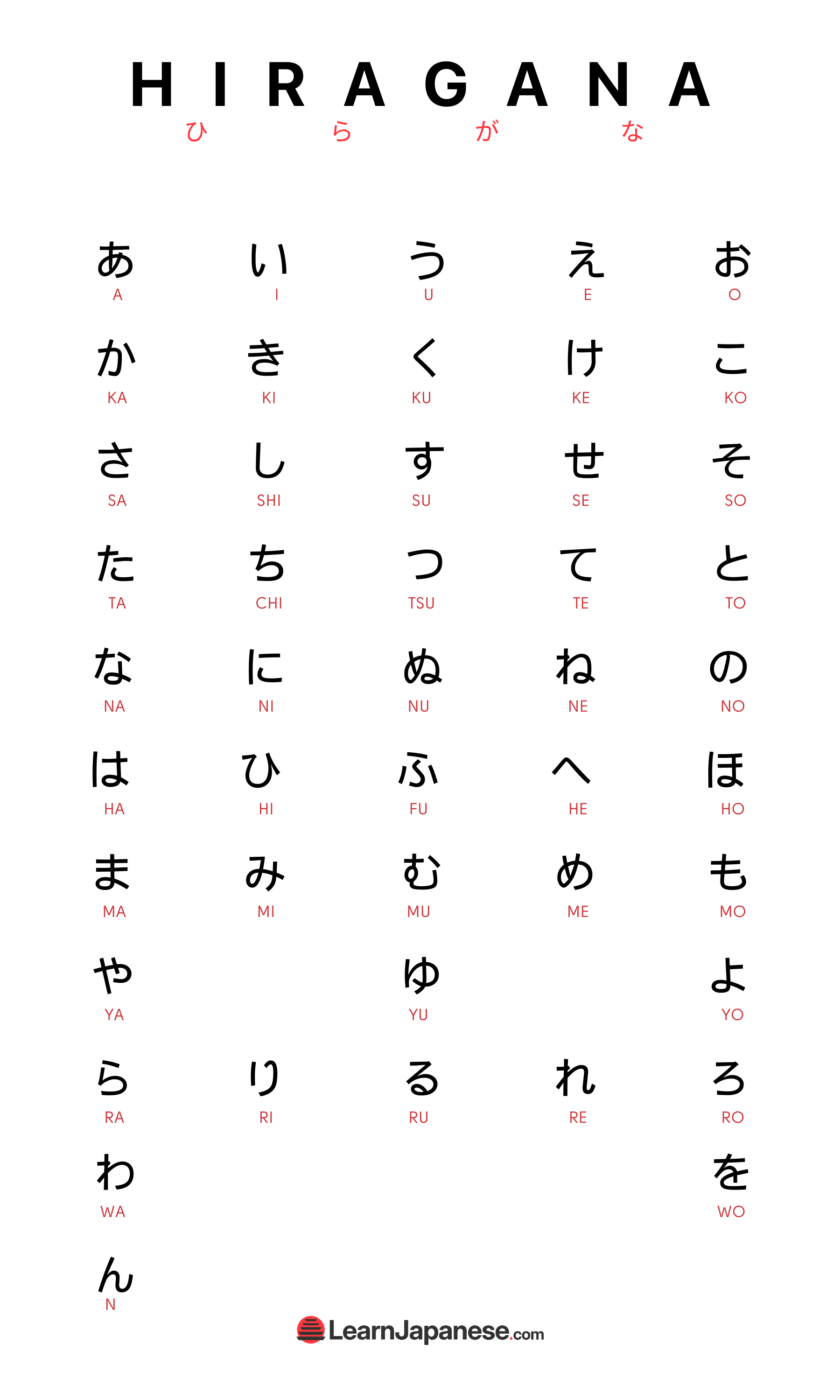
To illustrate how Hiragana works, let's look at the word we all know and love "こんにちは" (pronounced as "konnichiwa"), which means "hello" in Japanese. This word is composed of five Hiragana characters: こ (ko), ん (n), に (ni), ち (chi), and は (ha). Each character represents a specific sound, and when combined, they create the word "konnichiwa."
Mastering hiragana will be one of your first challenges. It's like learning the alphabet in English, but with a unique twist. You'll spend time familiarizing yourself with each character, practicing its pronunciation, and memorizing its shape. Repetition is key, as you write each character over and over until it becomes ingrained in your memory and the characters talk to you in your dreams. But, once you've mastered the basics of Hiragana, you'll find yourself ready to read and write simple Japanese sentences and you'll be able to express basic ideas, introduce yourself, and engage in simple conversations.