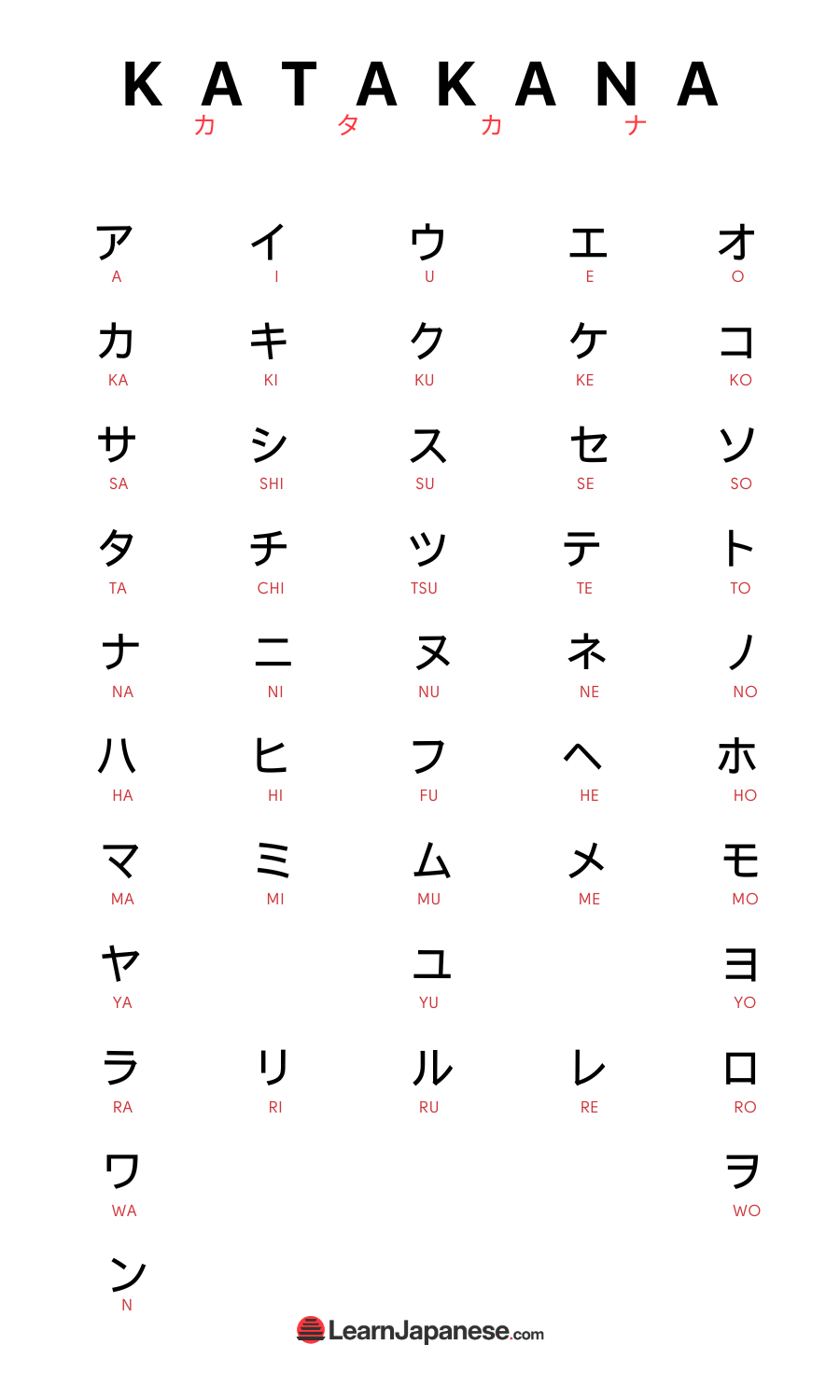
The second writing system you will face is katakana. These characters are simpler and more angular compared to Hiragana. They originated from Chinese characters but have evolved into a distinct script used specifically for certain purposes. When you start learning Katakana, you'll notice that many characters resemble their Hiragana counterparts, just with straighter lines and sharper corners.
One of the main functions of Katakana is to represent words borrowed from other languages. This includes English, so if you're a native English speaker, you might find Katakana words easier to recognize.
Here are some examples:
- レストラン (resutoran) - "restaurant"
- カメラ (kamera) - "camera"
- バナナ (banana) - "banana"
- チョコレート (chokoreeto) - "chocolate"
- サッカー (sakkaa) - "soccer"
- エスプレッソ (esupuresso) - "espresso"
- ビール (biiru) - "beer"
But Katakana isn't just about foreign words. It's also used for onomatopoeia, sound effects, and animal noises. These can add a lot of flavor to your Japanese conversations and make them more expressive. For instance, "ガラガラ" (garagara) might represent the sound of something rattling, and "ワンワン" (wanwan) is the Japanese equivalent of "woof woof."
In addition to that, Katakana is often used to emphasize or draw attention to certain words or phrases. It's like putting something in bold or using all caps in English. So if you see a word written in Katakana in a Japanese text, it's probably something important or worth noting.
Now, let's get into the nitty-gritty of how katakana works. There are 46 basic characters in the Katakana syllabary, just like in Hiragana. Each character represents a syllable sound, rather than individual letters like in English. So, for example, "カ" (ka) represents the sound "ka," "キ" (ki) represents "ki," and so on.